![]() |
| Photo © Paul Ross |
Showing posts with label wild budgerigars. Show all posts
Wednesday, October 12, 2011
Leaves or wild budgies?
Monday, August 22, 2011
Know your enemy
Wild budgerigars have many enemies. I listed the most common ones below:
1. Snake
The brown snake is one of the many natural enemies of wild budgerigars. They are found all over Australia and have extremely potent venom. Snakes are able to forge their way into a budgerigar's nest to gobble up newborn chicks.
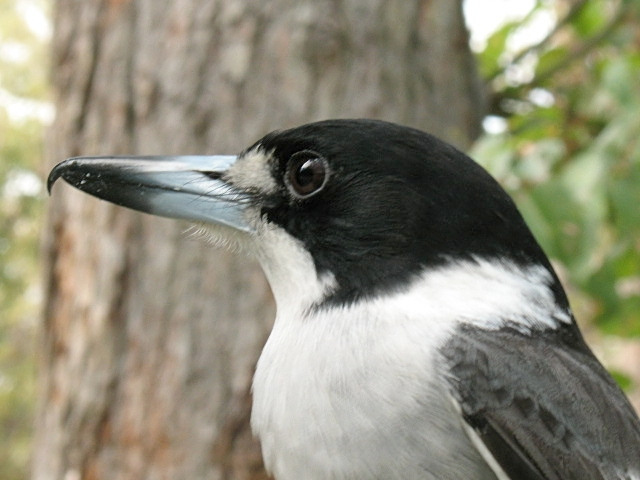
2. The Butcher Bird
... honestly, just the name already gives me the shivers. Have you seen the beak of this thing? They are magpie-like birds, but native to Australia. Like a snake, it raids the nests of wild budgerigars to feed on the newborn chicks.
3. Hawk
Hawks and falcons are fast enough to catch budgies in mid-flight with their sharp claws. While budgies are capable of reaching 16 m/s at a fast speed, a hawk can easily triple that speed. At first sight, budgies don't stand a chance against this enemy. But they are very acrobatic and small enough to try and hide from this winged predator.
4. Nature itself
The Australian Outback is beautiful but cruel. In times of drought, thousands of birds can die. The intense heat makes it impossible to find food and water. Budgies especially need to eat often; they can't survive without food for more than two days. On the other hand, the climate has somehow made them used to living without water. They can live up to one month without water. Even though budgies rarely get lost, they may end up into the desert while searching for food and shelter. From there it can only go downhill, unless they turn back.
5. Industrialization
Due to industrial development in Australia, much of the budgerigar's natural habitat has vanished. Their conservation status is still secure, but if the situation won't improve, they will soon be endangered.
1. Snake
| Image © Chris Thompson |
2. The Butcher Bird
![]() |
| Image © my.opera.com |
3. Hawk
![]() |
| Image © 10000birds.com |
4. Nature itself
![]() | |
| Image © Wheel 2 wheel |
5. Industrialization
![]() |
| Image © Asian Scientist |
Labels:
bird conservation,
budgies,
natural enemies,
nature,
wild budgerigars
Sunday, July 17, 2011
Birds in Australia (video)
Australia is home to over 50 different species of parrots.Wild budgerigars make a short appearance in this video. Look how graceful they are flying. Apparently budgies and zebra finches live in the same area in central Australia! They face many dangers (like the falcon in this video), but this is where they always lived... it's amazing!
Saturday, May 28, 2011
Migration habits of wild budgerigars
I found an excellent article on this online. I added some more information to it in order to make it more complete. Personally, I think this is one of the most interesting topics when it comes to the study of wild budgerigars.
Budgerigars in the U.S.
The wild budgerigar lives in Australia, primarily in desert areas such as scrub lands and grasslands. It can also be found in open, dry woodlands. Although budgerigars are not native to North America, some wild budgerigars can be found in American farmlands and on roadsides. These budgerigars were, or came from, domesticated birds that either escaped or were set free. Florida is one of the locations in the United States where wild, domesticated budgerigars can be found. Adaptations to their habitat by the budgerigars include being able to go without drinking for a month and not breeding if they are living in an area riddled with drought.
Note: domesticated budgies would not survive in Belgium, because the climate is too cold and wet for them during the Winter. Budgies thrive best in warm and dry Summers. But there is a record number (over 10,000) of wild ring necked parakeets settling around the capital city. Their natural habitat is in fact around Northern India, so they don't have a problem with our severe Winters.
Distance and direction
Budgerigars can fly up to 250 miles in a day to locate food and water. Budgerigars have such excellent eyesight they can sense rainstorms up to 40 miles away. This helps them migrate to areas that have a better potential for water and feeding grounds. Budgerigars typically migrate over vast distances and often in the correct direction, as they always seem to go "straight" to a waterhole or a food source.
Opposite of birds in the Americas, Budgerigars in their natural habitat of Australia migrate in a north to south pattern. This means that budgerigar flocks typically fly south in the spring and stay through the summer. In turn, budgerigars fly north in autumn and stay up north through the winter. The locations of migrating budgerigars, and the abundance of the flocks, vary from year to year. The north to south pattern of their migration makes it possible for budgerigars to take advantage of seasonal aridity and rainfall of the inner-Australian region.
Budgerigars in the U.S.
![]() |
| Wild budgerigars can also be found outside Australia. Image © Free-Extras.com |
![]() |
| Picture © resivanzijl.blogspot.com |
Flock spirit
Budgerigars are typically found in flocks, other known as chatters. Large flocks can be formed under favorable conditions, such as an abundance of food or breeding females. These flocks can number upwards of 5,000 to 10,000 birds. Flock movement is based on where food and water are available. Competition among budgerigars is typical in flocks for food, water, mates and nesting holes. But it will never come to a deadly conflict.
Flocks of budgerigars are known to withstand many hardships that other flock birds can't survive, such as brackish water, food shortages, extreme temperature changes and a large number of predators. The budgerigars found in wild flocks are strong, adaptive and intelligent, as opposed to the less adaptive birds that get sick and die easily in the extreme conditions in which they live. The most unlucky example of this is a blue budgie born in the wild.
![]() |
| The basic colour of wild budgies is green. The many colour variations are a result of mutations in specific genes. |
Flocks of budgerigars are known to withstand many hardships that other flock birds can't survive, such as brackish water, food shortages, extreme temperature changes and a large number of predators. The budgerigars found in wild flocks are strong, adaptive and intelligent, as opposed to the less adaptive birds that get sick and die easily in the extreme conditions in which they live. The most unlucky example of this is a blue budgie born in the wild.
Distance and direction
Budgerigars can fly up to 250 miles in a day to locate food and water. Budgerigars have such excellent eyesight they can sense rainstorms up to 40 miles away. This helps them migrate to areas that have a better potential for water and feeding grounds. Budgerigars typically migrate over vast distances and often in the correct direction, as they always seem to go "straight" to a waterhole or a food source.
![]() |
| Image © gdaywa.com |
Labels:
Australia,
budgies,
flock,
migration,
wild budgerigars
Subscribe to:
Posts (Atom)