Wednesday, August 31, 2011

Fresh air is a must, but is it safe?

How safe is it really to ventilate the room, when you have budgies in it?

We know that budgies thrive best in a warm and dry climate. We also know they are susceptible to drafts, especially during the cold seasons.

On the other hand, budgies get ill from living in cold, humid or musky places that never get any fresh air. So what should be done?

Image © Feathered Babies
You could move the budgie cage to another room and put it back after the other room has been ventilated. If you think it's too much work to move the budgie, you should definitely keep the room temperature at minimum 20°C (or even warmer) while you ventilate it. Of course, it is much safer during a warm Summer day. Then you can even keep your budgies outside for a little while.

Also, never ventilate the room when your budgie just took a bath! Wet feathers and a draft is a bad combination! Think of all those little kids who get a nasty cold from walking outside with wet hair...

Tuesday, August 30, 2011

The budgie cage

This morning, I went to the pet store to find a good bird cage for our future budgies.

I compared the different models and prices and eventually chose a medium-sized cage from the brand Tallinn:

Blue Tallinn budgie cage with supplies.
There are two reasons why I bought this cage:

  • It only has horizontal bars (which is easier for budgies to climb in)
  • The cage itself is also horizontally shaped, which means that budgies can fly around a little bit (this works better than with a vertically shaped cage)

The price of the cage was 70 EUR, which is reasonable, as it came together with a bunch of cage supplies (eating and drinking tray, sitting perches, even a nice-looking toy).

Remember that even a large cage is too small if your budgies have to live there constantly. That's why it's important to give them enough hours of free flight during the day.

Friday, August 26, 2011

Wedding Day

As some of you may know, tomorrow is a big day for me and Erlend... After 3 years of being very happy together, we are getting married!


I wish my mum's budgies could witness this moment with us, but the crowd of people would be too much for them. Nonetheless, I'm still going to give them a lot of apple pieces so they can celebrate with us!

With this, I would like to make another announcement: next week, it's my birthday, and I was entirely free to choose my present... ;) we're going to buy a couple of budgies! This is going to be the best birthday I've ever had :)

Many thanks to my boyfriend and all budgie lovers in the world, you make my dreams come true!

Tuesday, August 23, 2011

Lovely Kesha

I love budgies so much and this video proves that they are not just great pets, but they can be your best friend too :)


Frosty Days - "Lovely Kesha" from Pavel Levchenko on Vimeo.

Monday, August 22, 2011

Know your enemy

Wild budgerigars have many enemies. I listed the most common ones below:

1. Snake
Image © Chris Thompson
The brown snake is one of the many natural enemies of wild budgerigars. They are found all over Australia and have extremely potent venom. Snakes are able to forge their way into a budgerigar's nest to gobble up newborn chicks.

2. The Butcher Bird

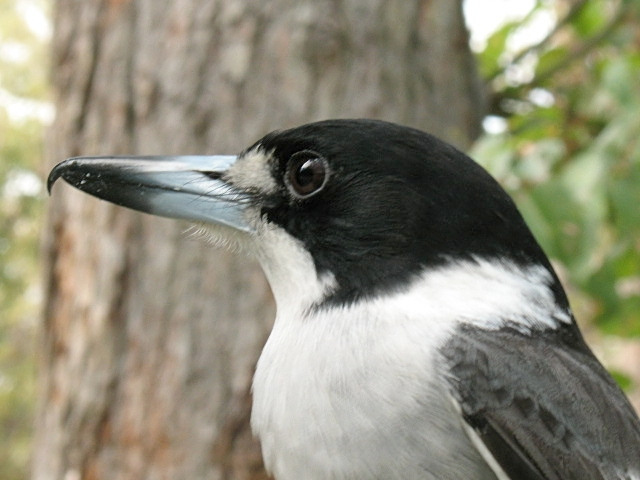
Image © my.opera.com
... honestly, just the name already gives me the shivers. Have you seen the beak of this thing? They are magpie-like birds, but native to Australia. Like a snake, it raids the nests of wild budgerigars to feed on the newborn chicks.

3. Hawk

Image © 10000birds.com
Hawks and falcons are fast enough to catch budgies in mid-flight with their sharp claws. While budgies are capable of reaching 16 m/s at a fast speed, a hawk can easily triple that speed. At first sight, budgies don't stand a chance against this enemy. But they are very acrobatic and small enough to try and hide from this winged predator.

4. Nature itself

Image © Wheel 2 wheel
The Australian Outback is beautiful but cruel. In times of drought, thousands of birds can die. The intense heat makes it impossible to find food and water. Budgies especially need to eat often; they can't survive without food for more than two days. On the other hand, the climate has somehow made them used to living without water. They can live up to one month without water. Even though budgies rarely get lost, they may end up into the desert while searching for food and shelter. From there it can only go downhill, unless they turn back.

5. Industrialization

Image © Asian Scientist
Due to industrial development in Australia, much of the budgerigar's natural habitat has vanished. Their conservation status is still secure, but if the situation won't improve, they will soon be endangered.