Showing posts with label bird conservation. Show all posts

Monday, August 22, 2011

Know your enemy

Wild budgerigars have many enemies. I listed the most common ones below:

1. Snake
Image © Chris Thompson
The brown snake is one of the many natural enemies of wild budgerigars. They are found all over Australia and have extremely potent venom. Snakes are able to forge their way into a budgerigar's nest to gobble up newborn chicks.

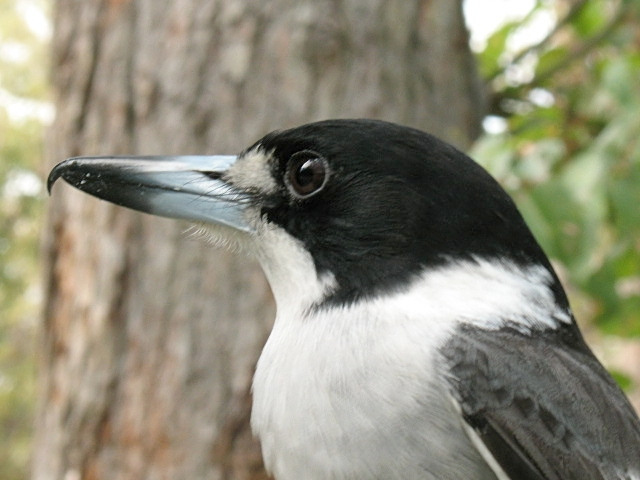
2. The Butcher Bird

Image © my.opera.com
... honestly, just the name already gives me the shivers. Have you seen the beak of this thing? They are magpie-like birds, but native to Australia. Like a snake, it raids the nests of wild budgerigars to feed on the newborn chicks.

3. Hawk

Image © 10000birds.com
Hawks and falcons are fast enough to catch budgies in mid-flight with their sharp claws. While budgies are capable of reaching 16 m/s at a fast speed, a hawk can easily triple that speed. At first sight, budgies don't stand a chance against this enemy. But they are very acrobatic and small enough to try and hide from this winged predator.

4. Nature itself

Image © Wheel 2 wheel
The Australian Outback is beautiful but cruel. In times of drought, thousands of birds can die. The intense heat makes it impossible to find food and water. Budgies especially need to eat often; they can't survive without food for more than two days. On the other hand, the climate has somehow made them used to living without water. They can live up to one month without water. Even though budgies rarely get lost, they may end up into the desert while searching for food and shelter. From there it can only go downhill, unless they turn back.

5. Industrialization

Image © Asian Scientist
Due to industrial development in Australia, much of the budgerigar's natural habitat has vanished. Their conservation status is still secure, but if the situation won't improve, they will soon be endangered.
Sunday, January 23, 2011

Budgerigar Conservation in Australia

In 2000, 20% of Australian birds were listed as threatened. The most contributing factor is the on-going clearing of vegetation for the purpose of both agricultural and urban expansion. On top of this, Australia has to deal with climate change that increases the frequency of heatwaves and changes rainfall patterns.

Urbanisation in Australia always begins with a total clearing of the area. This leads to devastating results for the biodiversity.

Where do budgerigars play a part in this?


Budgerigars in Australia. Map (c) Birdata.com.au

As you can see, budgerigars are all over Australia. They cannot possibly escape what's happening, though at the moment their wildlife status is still secure. What threatens them most might not be urbanisation, but especially agricultural expansion in combination with climate changes. A more recent article on Australian bird conservation says that many birds that depend on the Australian network of wetlands are getting in trouble. Among those birds are budgerigars, who are often on the move in search for a new waterhole. Any undesirable changes through river regulation, water diversion, land clearing or salinity puts the life of the wetland birds in danger.


Budgerigars drinking at an isolated dam. Photo (c) the state of Australian birds, 2004

There are thousands of budgerigars living in the central part of Australia, where it's very hot. They already have to cope with a severe climate and would do anything for water. You don't need to imagine what happens when there is water shortage, for it has already happened in the past. When they finally find water, budgerigars go insane and all swoop down at the pool at the same time, being so thirsty that they accidently drown each other. A water-hungry venture such as agriculture only increases the risk of this horrible accident.

What can be done?
  • When planning new urban areas or agricultural expansion, large areas of land should be left intact. Wildlife corridors should be included in urban planning.
  • Every individual person can help, because it's also your responsibility. You have to be aware that not only in Australia, but pretty much everywhere in the world it's getting harder each day to maintain bird habitat and biodiversity. Plant and plan your garden so that birds can find their home there, when their other home is destroyed.
To read the latest report on the conservation status of Australian birds, go here (2010, Islands and Birds)